

Is Hybrid working broken or meetings are?

For the past few years, we’ve been hearing the same narrative:
“Hybrid work isn’t working.”
“People aren’t collaborating.”
“Offices are underperforming.”
But this diagnosis is flawed.
We at Crux don’t believe hybrid working is broken, we believe meetings are.


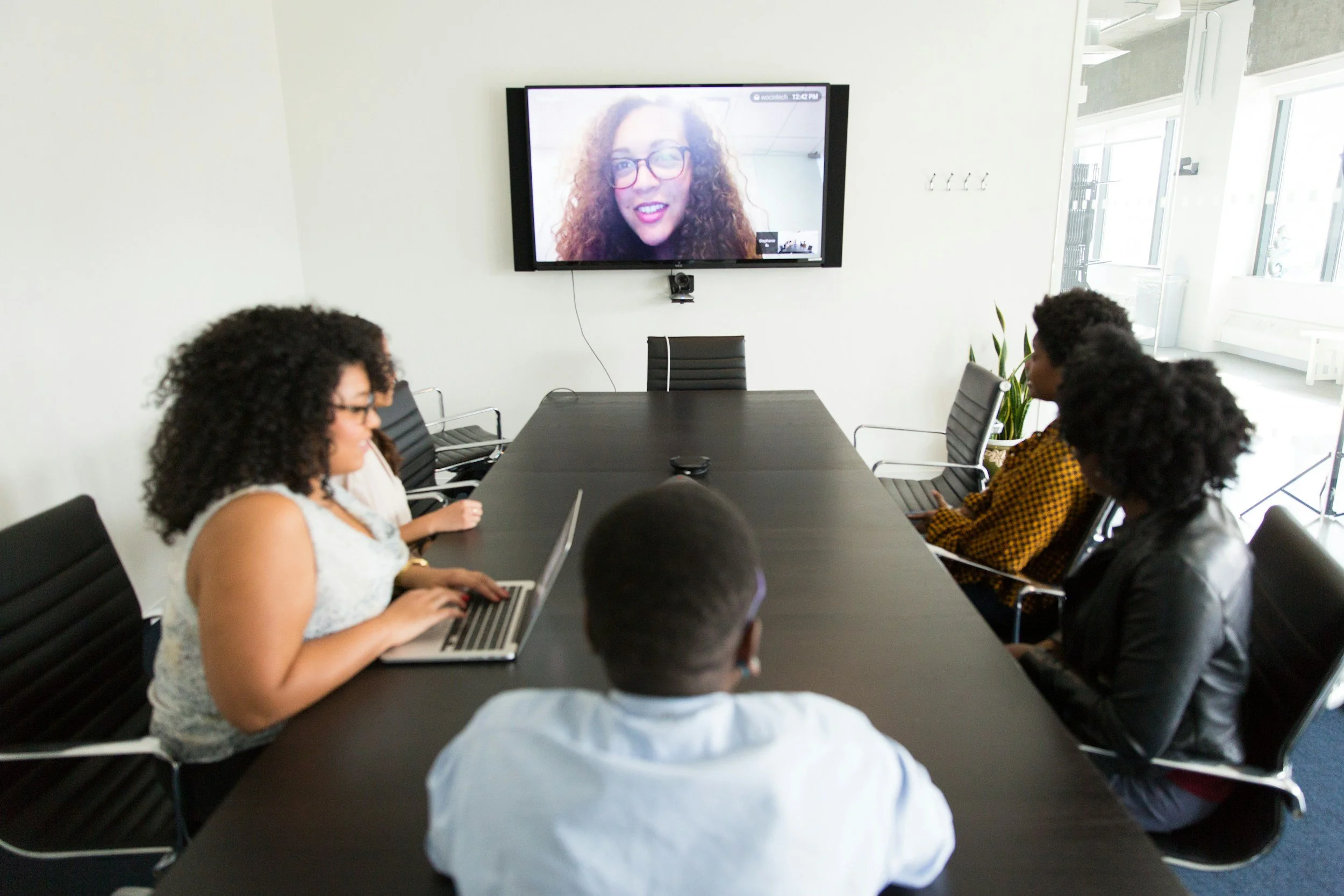



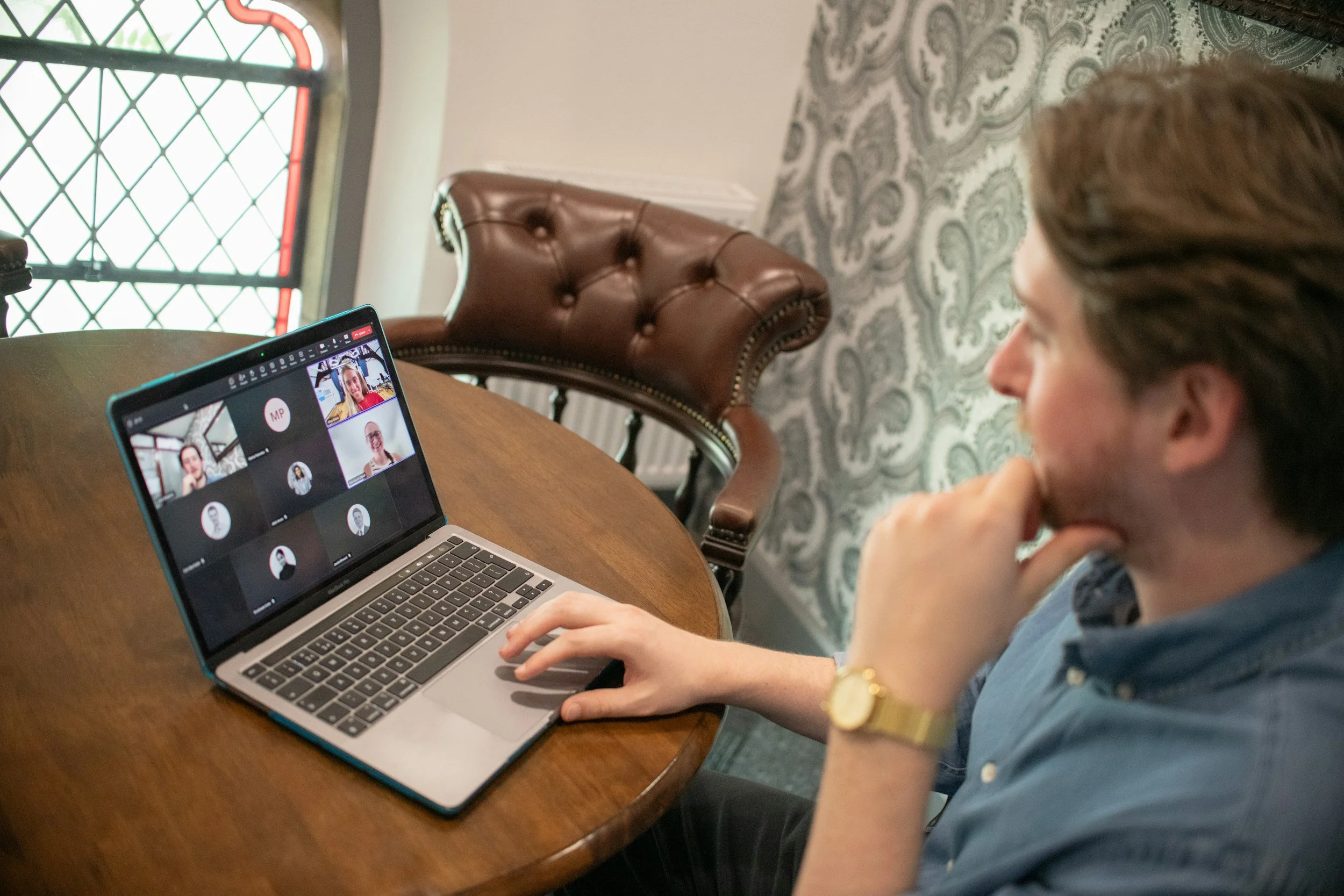
The Real Problem: We Designed Hybrid Around the Wrong Thing Most organisations didn’t design hybrid working. They reacted to it.
And in that reaction, one critical component was overlooked:
The meeting experience.
Because hybrid work lives or dies in one place - the moment people try to connect.
When that moment fails, everything else follows:
Collaboration drops
Engagement declines
Frustration rises
Office value is questioned
Not because hybrid doesn’t work but because the interface between people is broken.
Bad Meetings Are a Design Failure — Not a Behavioural One We often blame people:
“They don’t turn cameras on”
“They don’t engage”
“They multitask”
“The blurred background doesn’t provide trust”
But step back and ask a more fundamental question: What did the space enable them to do?
Because most meeting rooms are still designed for a pre-hybrid world:
A single screen at the front
Tables oriented around in-room hierarchy
Poor sightlines for remote participants
Inconsistent audio pickup
Lighting designed for presence, not perception
These aren’t minor issues. They fundamentally distort communication and when communication is distorted, behaviour adapts.
People disengage not because they want to but because the environment makes participation difficult.
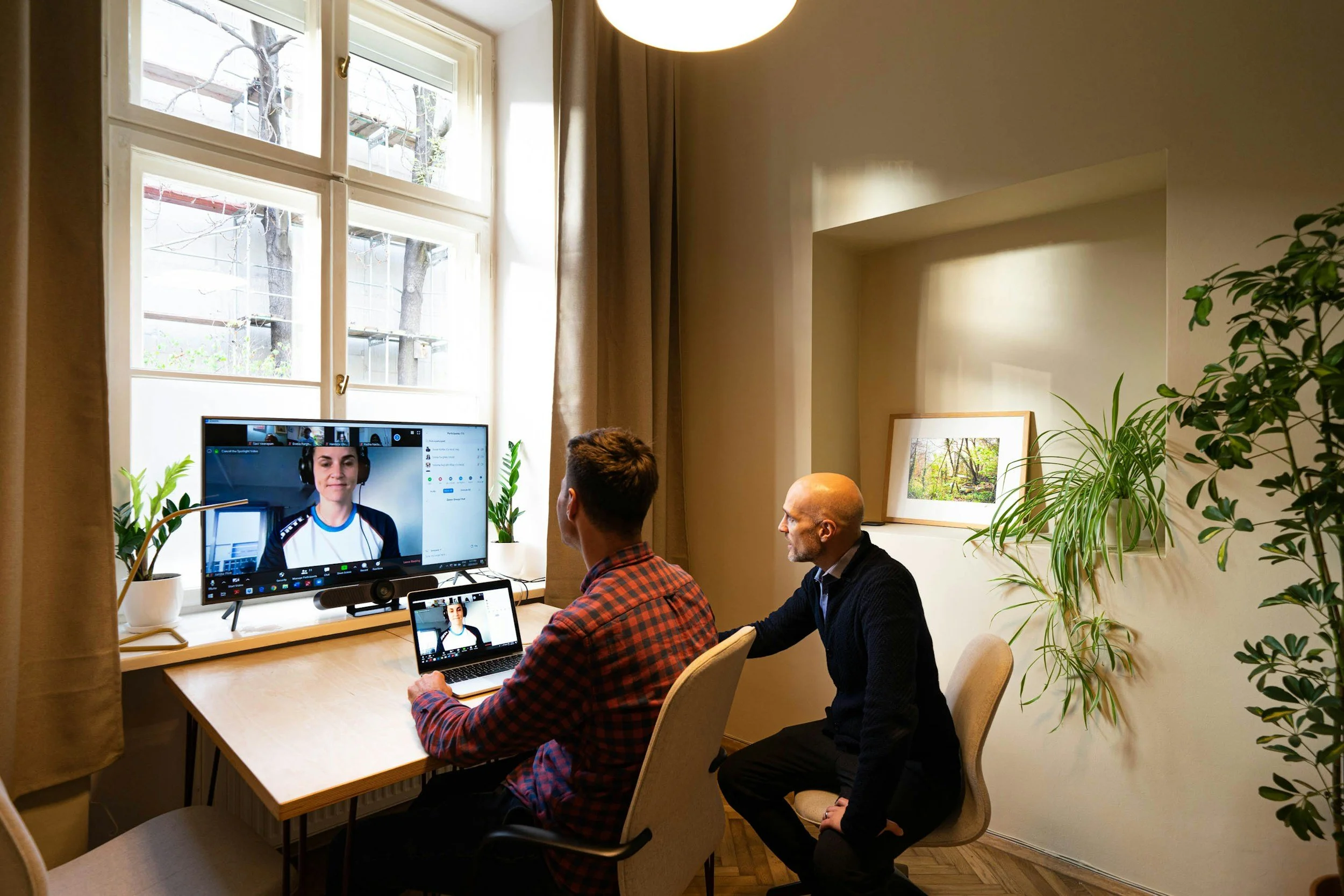
The Invisible Layer: AV is now Architecture
One of the biggest misconceptions in workplace design today is this:
AV is still treated as an add-on.
AV is something specified late, after the room has been designed. AV is something value engineered and can be something that is retrofitted, and this is where most meeting rooms fail.
Because in a hybrid world:
AV is not technology. It is spatial infrastructure.
It defines:
Who is seen
Who is heard
Who leads the conversation
Who feels included
And yet, too often, it is introduced after the room has been designed.
The Overlooked Critical Layer: Acoustics Defines the Remote Experience If AV determines what you see, acoustics determines whether you understand anything at all. And yet, it remains one of the most underestimated elements of meeting room design, often the first thing to be value engineered out or pushed to the end of the process.
Why?
Because acoustics is invisible so we don’t understand it’s full value until it’s too late, until the room doesn’t work. It’s not always well understood, and as a result, it’s frequently perceived as an unnecessary cost rather than a performance-critical component. But this is where meeting rooms fail.
In most meeting rooms, acoustics are designed for comfort within the space, not for clarity on the call. That distinction is fundamental.
Remote participants don’t experience the room physically, they experience it entirely through captured sound.
If the room’s acoustic performance is poor, clarity on the call degrades. This directly impacts their ability to participate effectively. Straining to hear conversations or dealing with echo and distortion increases cognitive load, often leading to fatigue or even headaches.
The result is simple: reduced engagement, compromised communication, and ultimately, lower productivity.
Why This Matters More Than People RealiseFor someone dialling in remotely, poor acoustics don’t feel like a minor inconvenience.
They fundamentally degrade the meeting experience:
Voices become distant or inconsistent
Conversations blur when multiple people speak
Background noise competes with speech
Echo and reverberation reduce intelligibility
The result?
Repetition
Misinterpretation
Fatigue
Disengagement
Not because the meeting lacks value but because it’s simply too hard to follow.
And when people can’t hear properly, they stop contributing. When they stop contributing, collaboration breaks down.
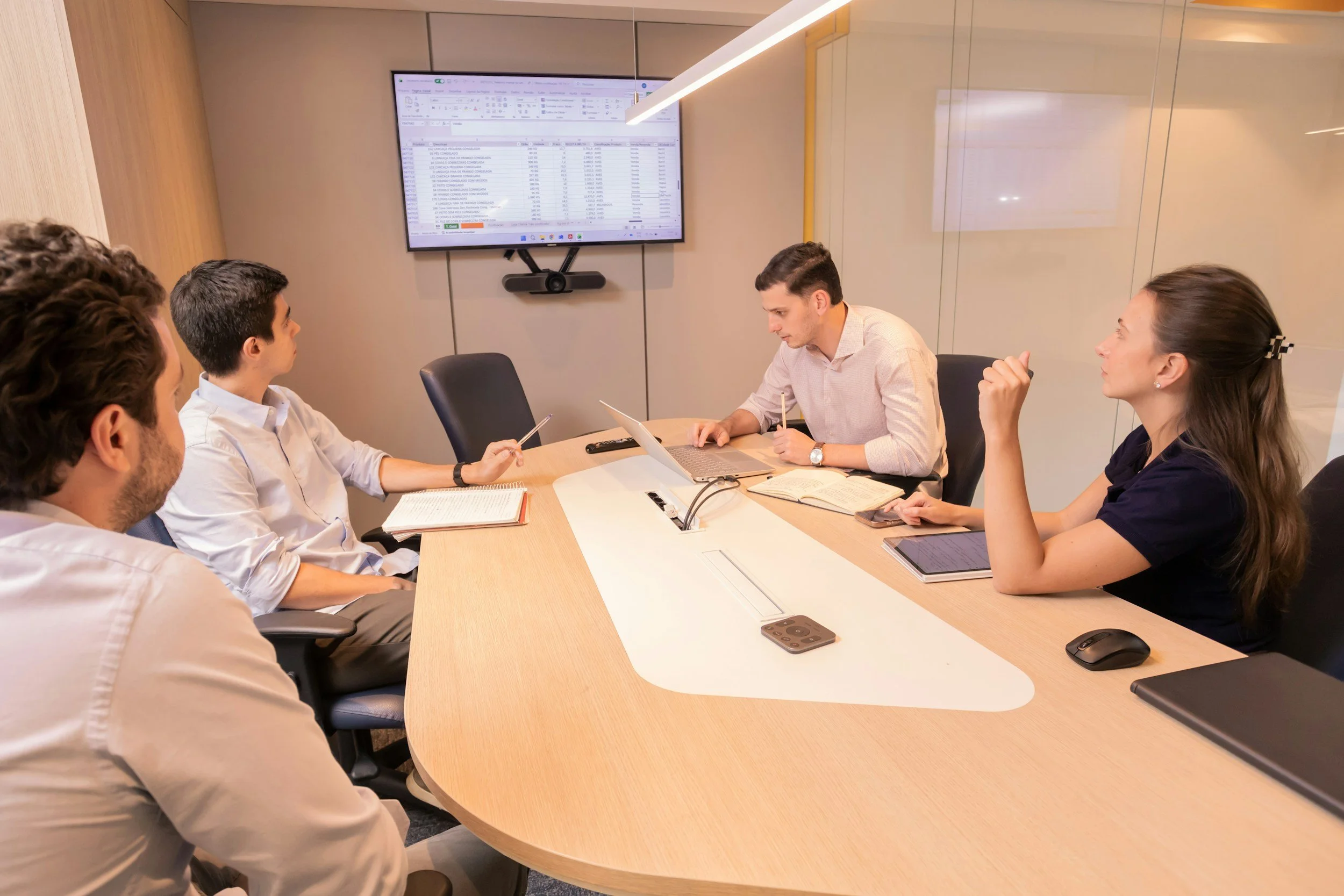
The Technical Reality Speech intelligibility isn’t subjective—it’s measurable.
It is driven by:
Reverberation time (RT60)
Speech transmission index (STI)
Background noise levels (NC/NR ratings)
Microphone placement vs reflective surfaces
If these aren’t resolved early in design, no amount of technology will fix it later.
You can install the best microphones in the world but if the room is acoustically poor: you are amplifying a bad sound.
Why Retrofitting Fails 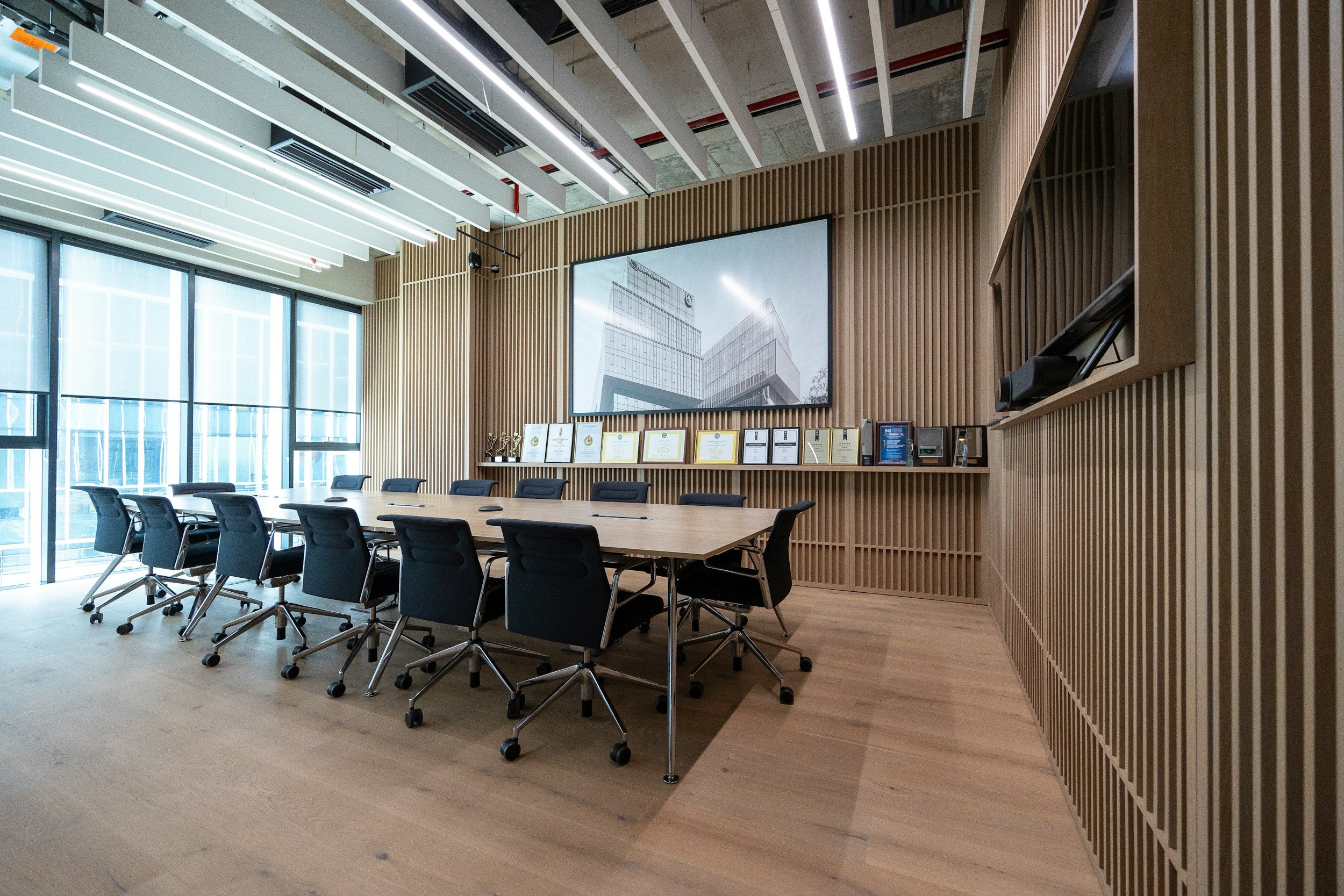
Just like AV, acoustics cannot be layered in at the end.
When it is, the symptoms are predictable:
Cameras misaligned with eyelines
Microphones fighting the room
Screens disconnected from spatial logic
Lighting that works in person—but not on camera
Acoustic panels added too late to solve real issues
The result?
A split experience:
The room works for those inside
The technology works (just about)
But the meeting fails
Because the system was never designed as one.
The Shift: Designing From the Remote Experience Backwards Forward-thinking organisations are now asking a different question: “What does the room look and sound like through the lens and through the microphone?”
This changes everything.
Because when you design from the remote participant’s perspective:
Sightlines become intentional
Camera positions become architectural decisions
Table geometry becomes a communication tool
Backgrounds become part of brand and clarity
Lighting becomes performance-critical
Acoustics becomes foundational—not optional
You stop designing a room. You start designing a shared experience.
Meeting Equity Is the New Workplace KPI In hybrid environments, there are always two audiences:
The people in the room
The people on the screen
Historically, one has always dominated but high-performing organisations are shifting toward: meeting fairness
Where:
Remote participants are not secondary
Audio is balanced and intelligible
Visual presence is consistent
Interaction feels natural—not forced
This isn’t a “nice to have.”
It directly impacts:
Decision quality
Speed of collaboration
Inclusion
Talent retention
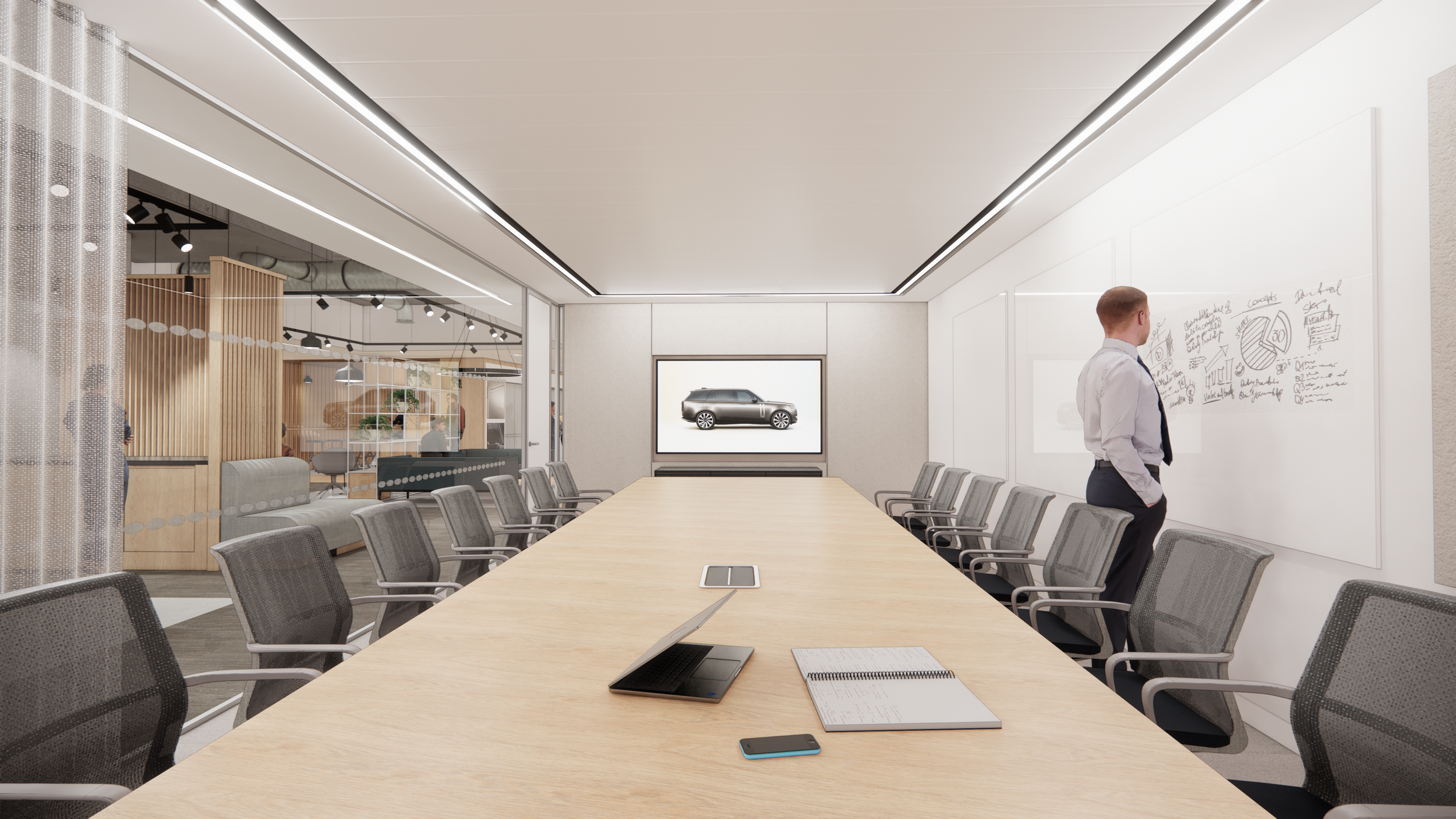
What This Means for Workplace Design
At Crux Design Studio, this is no longer a specialist conversation. It’s fundamental.
Because a meeting room that doesn’t work in hybrid conditions isn’t just underperforming, it’s a liability.
Which is why AV and acoustics must be embedded from day one:
Strategy & Planning — defining behaviours and meeting types
Concept Design — shaping geometry, orientation, and experience
Technical Design — integrating MEP, acoustics, lighting, and AV as one system
Because high-performance workplaces are not just designed to look good, they are designed to perform under real conditions.
From Rooms to Systems The future of workplace design isn’t about individual rooms.
It’s about connected systems of experience:
Space
Technology
Acoustics
Behaviour
Culture
When one fails, the system fails. When they align, hybrid works.
Final Thought
We at Crux don’t believe hybrid work has failed. We’ve just been measuring the wrong thing.
Instead of asking:
“Why aren’t people coming back to the office?”
We should be asking:
“Why don’t our meetings work, no matter where people are?”
Because fix that and everything else starts to fall into place.